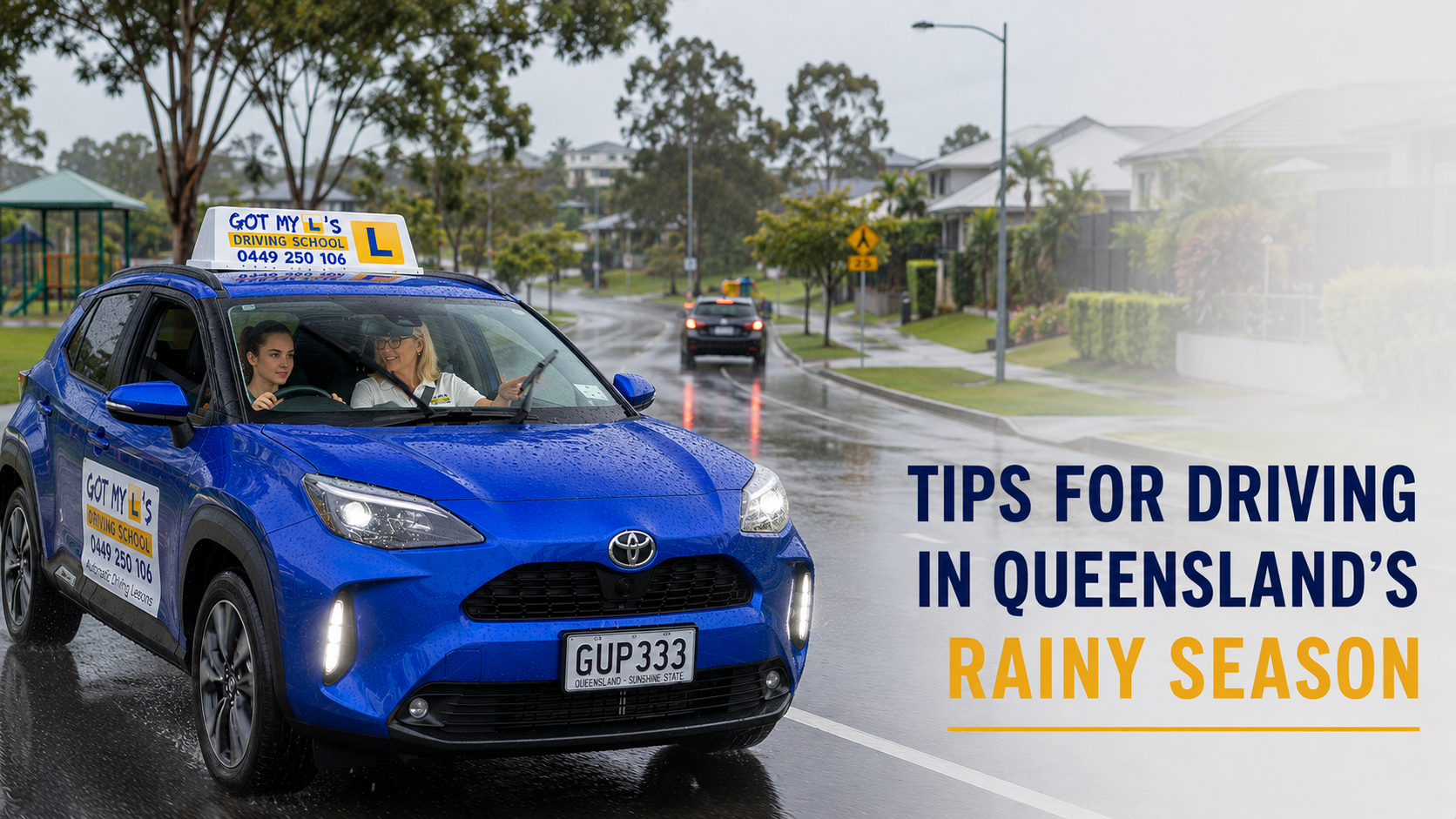
Tips for Driving in Queensland's Rainy Season
Stay Safe When Wet Weather Hits
Queensland weather can change quickly. One minute you're driving in sunshine, and the next you're dealing with heavy rain, reduced visibility and slippery roads.
For learner drivers, wet weather can feel intimidating, but with the right preparation and driving techniques, rain can become another valuable learning experience.
At Got My L's Driving School, Leonie teaches learners how to drive safely in all weather conditions, helping build confidence that lasts long after the driving test.
Why Rain Makes Driving More Dangerous
Rain affects almost every part of driving.
When roads become wet:
✔ Tyres have less grip
✔ Braking distances increase
✔ Visibility decreases
✔ Other drivers become less predictable
✔ Painted road markings become slippery
✔ Water can hide potholes and road damage
The first 20–30 minutes after rain begins can be especially slippery because oil and dirt mix with the water before being washed away.
Before You Drive
A few simple checks can make a big difference before driving in wet weather.
Check your:
✔ Tyres have good tread and correct pressure
✔ Windscreen wipers clear the screen properly
✔ Washer bottle is full
✔ Headlights are working
✔ Brake lights and indicators are functioning
✔ Windows are clean inside and out
Good visibility is just as important as good vehicle control.
Slow Down and Increase Your Following Distance
Wet roads mean your vehicle takes longer to stop.
Instead of following another vehicle by two seconds, increase your gap to at least four seconds whenever roads are wet.
This gives you more time to:
- React to sudden braking
- Avoid collisions
- Brake smoothly
- Maintain better control
Remember:
The faster you travel, the longer it takes to stop.
Drive Smoothly
One of the biggest mistakes learners make in the rain is making sudden movements.
Instead:
✔ Accelerate gently
✔ Brake earlier
✔ Steer smoothly
✔ Avoid harsh lane changes
✔ Look well ahead
Smooth driving helps your tyres maintain grip and keeps the vehicle balanced.
Use Your Headlights Correctly
If your windscreen wipers are on because of rain, your headlights should also be on.
Headlights help you:
- See further ahead
- Make your vehicle more visible
- Improve safety for everyone
Avoid using high beam during heavy rain as the light reflects back off the water and reduces visibility.
Watch Out for Aquaplaning
Aquaplaning happens when your tyres ride on top of water instead of gripping the road.
Signs include:
- The steering suddenly feels light
- The vehicle doesn't respond normally
- The engine revs increase without acceleration
If this happens:
✔ Stay calm
✔ Ease off the accelerator
✔ Keep the steering wheel straight
✔ Avoid heavy braking
Your tyres will usually regain grip as your speed reduces.
Never Drive Through Floodwater
Queensland experiences flash flooding every year.
Even shallow water can:
- Hide damaged roads
- Sweep vehicles away
- Cause engine damage
- Leave you stranded
If the road is flooded:
Turn around and find another route.
The Queensland safety message says it best:
If it's flooded, forget it.
Be Extra Careful Around Cyclists and Motorcyclists
Rain affects vulnerable road users even more than drivers.
Give cyclists and motorcyclists:
✔ More following distance
✔ Plenty of passing space
✔ Extra patience
Remember that painted lane markings, manhole covers and wet leaves become extremely slippery for two-wheel vehicles.
Watch for Pedestrians
People often rush across roads during heavy rain.
Be especially alert near:
- Schools
- Shopping centres
- Bus stops
- Train stations
- Pedestrian crossings
Reduce your speed whenever visibility is poor.
Country Roads Need Extra Care
If you're driving outside Brisbane, Moreton Bay or the Sunshine Coast, remember that rural roads can become hazardous very quickly.
Watch for:
- Kangaroos and wildlife
- Mud on the road
- Water across low-lying areas
- Reduced visibility around bends
- Gravel washed onto sealed roads
Drive to the conditions—not just the posted speed limit.
Practise Wet Weather Driving
Many learner drivers avoid driving when it rains.
However, supervised practice in wet weather is one of the best ways to build confidence.
An accredited driving instructor can help you learn:
- Safe braking techniques
- Hazard perception
- Following distances
- Speed management
- Vehicle control on slippery roads
These are valuable skills that will stay with you long after you've passed your driving test.
Rain Driving Checklist
Before every wet weather trip, remember these simple steps:
✔ Check your tyres
✔ Test your windscreen wipers
✔ Turn your headlights on
✔ Slow down
✔ Leave a four-second following distance
✔ Brake gently
✔ Avoid sudden steering
✔ Never drive through floodwater
✔ Stay calm and drive to the conditions
Learn to Drive Safely in All Weather Conditions
Queensland weather can be unpredictable, but with the right training, you can learn to drive safely and confidently in rain, sunshine and everything in between.
At Got My L's Driving School, Leonie provides patient, professional automatic driving lessons throughout Redcliffe, North Lakes, Mango Hill, Kallangur, Rothwell, Griffin, Clontarf, Woody Point and surrounding Moreton Bay suburbs.
Why learn with Got My L's Driving School?
✔ Accredited Queensland Driving Instructor
✔ Modern Toyota Yaris Cross Hybrid with dual controls
✔ Calm, supportive learning environment
✔ Lessons tailored to your experience level
✔ Driving test preparation
✔ Real-world training in a variety of weather and traffic conditions
📞 Book your next lesson today: 0449 250 106