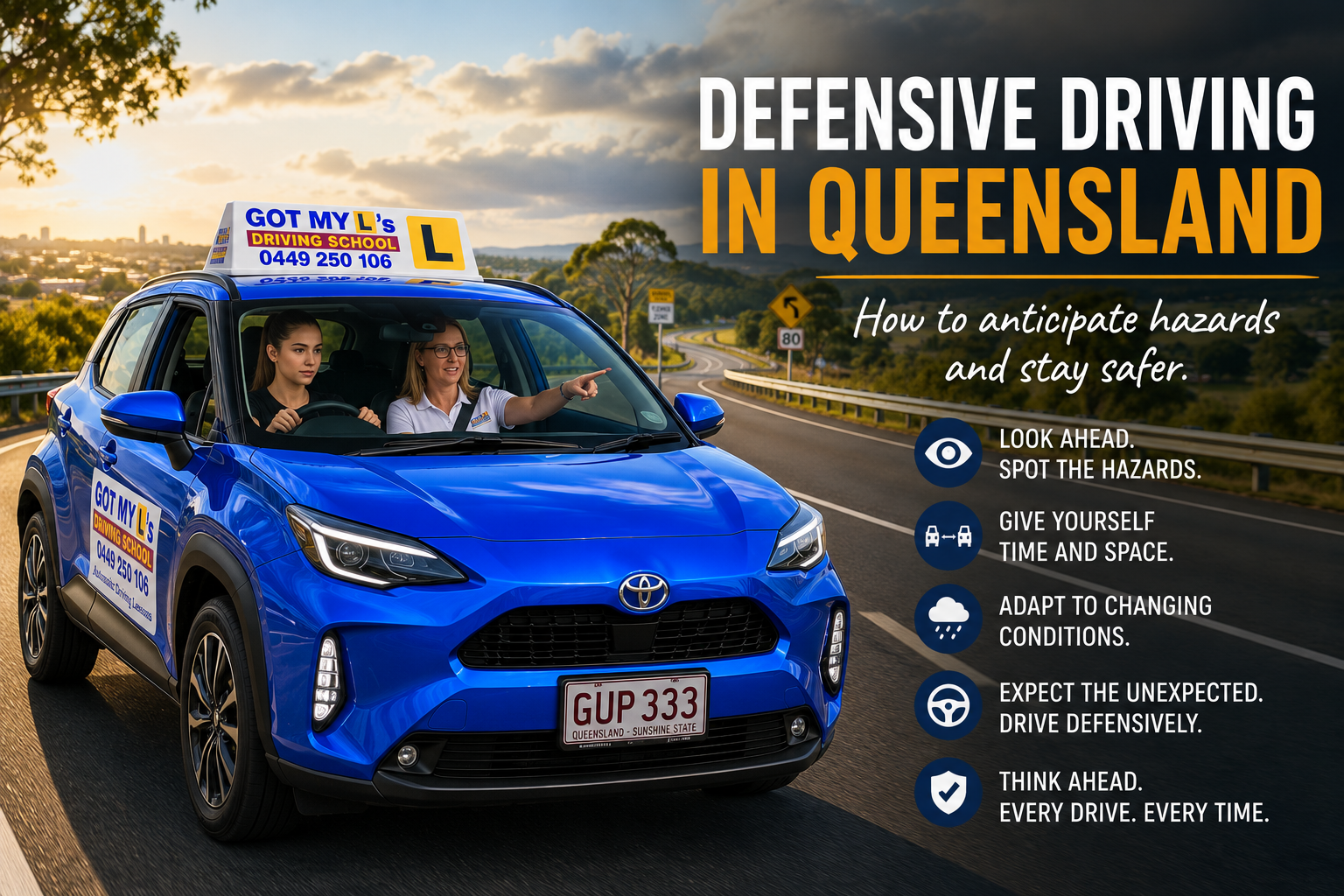
Defensive Driving in Queensland: How to Anticipate Hazards and Stay Safer
Driving safely is about more than controlling your vehicle, following the speed limit or passing your driving test.
One of the most important skills a driver can develop is the ability to look ahead, recognise potential hazards and give themselves enough time and space to respond safely.
This is the foundation of defensive driving.
Queensland drivers can face busy suburban intersections, roundabouts, pedestrians, cyclists, heavy traffic, sudden rain, wildlife, roadworks and constantly changing road conditions. Defensive driving is about recognising that these situations can change quickly and being prepared before a problem develops.
Good drivers are not always the people with the fastest reactions.
Often, they are the drivers who saw the problem developing before everyone else did.
Key Takeaways
- Defensive driving is about anticipating potential hazards before they become emergencies.
- Looking further ahead helps drivers identify developing problems earlier.
- Maintaining time and space around your vehicle gives you more options to respond safely.
- Good defensive drivers remain prepared for mistakes made by other road users.
- Queensland's changing weather, urban traffic and rural roads all require drivers to adapt.
- Avoiding distractions helps drivers stay mentally engaged with what is happening around them.
- Learner drivers can develop defensive driving habits from the very beginning of their driving journey.
What Does Defensive Driving Actually Mean?
Defensive driving is not about expecting every other driver to do the wrong thing.
It is about recognising that mistakes, unexpected events and changing conditions can happen at any time.
A defensive driver continually observes what is happening around them and thinks ahead about what could happen next.
For example:
- A vehicle waiting at an intersection may pull out unexpectedly.
- The car in front may brake suddenly.
- A pedestrian may step onto the road.
- A driver may change lanes without indicating.
- Traffic may suddenly slow ahead.
- Rain may reduce visibility and make the road surface slippery.
The aim is not to become nervous or overly cautious.
It is to give yourself enough time, space and awareness to deal with unexpected situations calmly.
Defensive driving is about thinking ahead so you are not forced to react at the last possible moment.
Look Further Than the Car in Front of You
One common mistake, particularly for newer drivers, is focusing only on the vehicle directly in front.
Defensive driving requires you to look further ahead.
Where possible, scan the road beyond the vehicle immediately ahead and look for signs that traffic conditions may be changing.
Watch for:
- Brake lights several vehicles ahead.
- Traffic building near intersections.
- Pedestrians approaching crossings.
- Vehicles waiting to enter the road.
- Changes in traffic lights.
- Roadworks or lane closures.
- Cyclists and other vulnerable road users.
The earlier you identify a potential hazard, the more time you have to respond.
This often means you can make a smooth adjustment rather than suddenly braking or swerving.
Give Yourself Time and Space
The space around your vehicle is one of your most important safety tools.
Maintaining a safe following distance gives you more time to respond if the vehicle in front slows or stops suddenly.
However, defensive driving is about more than simply watching the car ahead.
Try to avoid situations where you are boxed in by other vehicles with limited room to move if something unexpected happens.
Think about:
- Leaving an appropriate following distance.
- Increasing your following distance in wet or poor conditions.
- Avoiding unnecessary time driving directly beside another vehicle.
- Leaving enough room when stopped behind traffic.
- Being aware of vehicles behind you as well as those in front.
The more space you have, the more options you have.
Expect Other Road Users to Make Mistakes
Defensive driving involves recognising that other people can make mistakes.
A driver may forget to indicate.
Someone may misjudge a gap.
A vehicle may change lanes suddenly.
Another driver may not see you.
This does not mean assuming that everyone on the road is dangerous. It means remaining aware of the possibility that something may not go as expected.
For example, if you see a vehicle waiting to turn across your path, avoid assuming that they have definitely seen you.
If you notice a driver drifting within their lane, give them extra space rather than immediately driving alongside them.
Defensive drivers are constantly asking themselves:
What could happen next, and what can I do to give myself time to respond?
Queensland Roads Can Change Quickly
Queensland offers a wide variety of driving environments, and a defensive driver adjusts their approach to suit the conditions.
Urban and Suburban Driving
Busy suburban roads can present constant hazards, including:
- Roundabouts and complex intersections.
- Pedestrians and cyclists.
- School zones.
- Vehicles entering and leaving driveways.
- Congested traffic.
- Sudden stops.
In these environments, regularly scanning ahead and checking your surroundings is essential.
Wet Weather and Changing Conditions
Queensland weather can change quickly.
Heavy rain can reduce visibility and affect the grip between your tyres and the road.
Defensive driving in wet conditions may mean:
- Reducing your speed when appropriate.
- Increasing your following distance.
- Allowing extra time to stop.
- Using headlights when visibility is reduced.
- Being particularly careful around standing water and slippery surfaces.
The conditions should influence the way you drive.
A speed or following distance that may be appropriate in clear, dry conditions may not provide the same safety margin in heavy rain.
Rural and Regional Roads
Regional and rural driving can present a completely different set of challenges.
Drivers may encounter:
- Wildlife.
- Heavy vehicles.
- Long distances.
- Fatigue.
- Changing road surfaces.
- Limited opportunities to safely overtake.
On unfamiliar roads, it is particularly important to look ahead and avoid driving faster than your ability to see and respond safely to potential hazards.
Don't Drive on Autopilot
Driving is something many people do every day.
As experience grows, it can be easy to become too comfortable and start driving on autopilot.
Your eyes may be looking at the road, but your attention may be somewhere else.
Defensive driving requires active involvement in the driving task.
Regularly ask yourself:
- What is happening ahead of me?
- What are the vehicles around me doing?
- Where could a hazard come from?
- Is there enough space around my vehicle?
- What could change in the next few seconds?
You do not need to overthink every moment of your drive.
However, staying mentally engaged helps you identify developing hazards earlier.
Managing Distractions
One of the easiest ways to reduce your ability to anticipate hazards is to become distracted.
Distractions are not limited to mobile phones.
They can include:
- Adjusting navigation while driving.
- Changing music or other vehicle controls.
- Conversations with passengers.
- Looking for something inside the vehicle.
- Thinking about something unrelated to driving.
Your eyes can be looking at the road while your mind is somewhere else.
Where possible, set your navigation, music and other controls before beginning your journey.
If something requires your full attention, find a safe place to pull over before dealing with it.
The more attention you can give to the driving environment, the earlier you are likely to recognise potential hazards.
Defensive Driving Starts Before You Leave
Defensive driving does not begin when you start the engine.
Being prepared before a trip can also reduce unnecessary risks.
Before leaving, consider:
- Are you rested and fit to drive?
- Is your vehicle safe and properly maintained?
- Are your tyres in good condition?
- Do you know where you are going?
- Have you checked the expected weather conditions?
- Is your phone charged if you need it for navigation or emergencies?
Taking a few moments to prepare can help make the journey safer and reduce distractions once you are on the road.
How Learner Drivers Can Develop Defensive Driving Skills
For learner drivers, it can be tempting to focus entirely on passing the driving test.
However, learning to drive safely involves much more than simply completing the required manoeuvres.
A good driver learns to understand what is happening around them.
This includes developing skills such as:
- Looking well ahead.
- Identifying potential hazards.
- Maintaining safe space around the vehicle.
- Reading the behaviour of other road users.
- Adjusting to changing road and weather conditions.
- Making calm and informed decisions.
These skills take time and practice.
During driving lessons, learners should not only ask:
"What do I need to do to pass my test?"
They should also be learning to ask:
"What is happening around me, and what could happen next?"
Developing this way of thinking early can help create safer driving habits that continue long after the driving test is passed.
Defensive Driving Is About Giving Yourself Options
The main principle behind defensive driving is simple.
The earlier you identify a developing problem, the more options you have.
If you have left enough space, you may only need to gently slow down.
If you have been watching traffic further ahead, you may recognise congestion before the vehicle directly in front suddenly brakes.
If you have noticed a potential hazard at an intersection, you may already be prepared to respond.
Defensive driving is not about being afraid of the road.
It is about being prepared for it.
By looking ahead, managing space, staying focused and adapting to changing conditions, Queensland drivers can give themselves more time to make safe decisions.
And often, the safest response to a hazard is the one you never have to make suddenly.
Frequently Asked Questions
What is defensive driving?
Defensive driving is a driving approach that focuses on anticipating potential hazards and giving yourself enough time and space to respond safely. It involves actively observing the road environment rather than simply reacting when something goes wrong.
Is defensive driving useful for learner drivers?
Yes. Learner drivers can begin developing defensive driving habits from their first lessons. Learning to scan ahead, identify hazards and maintain safe space around the vehicle can help build safer habits early.
Does defensive driving mean driving slowly?
No. Defensive driving means driving appropriately for the conditions. Depending on traffic, weather and the road environment, this may involve adjusting your speed and following distance to maintain a safe safety margin.
What is the most important defensive driving skill?
One of the most important skills is anticipation. The earlier you recognise a developing hazard, the more time and options you have to respond safely.
How can I improve my hazard awareness while driving?
Try to look beyond the vehicle directly in front of you. Scan intersections, watch traffic further ahead, check for pedestrians and cyclists, and pay attention to vehicles that may enter or cross your path.
How much space should I leave between my vehicle and the one in front?
The appropriate distance depends on the conditions. You should allow enough space to react and stop safely, increasing your following distance when visibility is poor or the road is wet or slippery.
Why is defensive driving important in Queensland?
Queensland drivers encounter a wide range of conditions, including busy urban roads, roundabouts, heavy traffic, changing weather, rural roads and wildlife. Defensive driving helps drivers adapt to these environments and prepare for potential hazards.
Can defensive driving help experienced drivers?
Yes. Defensive driving is not only for learners. Even experienced drivers can benefit from regularly reviewing their habits, managing distractions and avoiding becoming overconfident or complacent behind the wheel.
Learn to Think Ahead With Got My L's Driving School
Learning to drive is about much more than passing the driving test.
At Got My L's Driving School, we help learner drivers develop the skills and confidence needed to become safer, more aware and more independent drivers.
That includes learning how to read the road, recognise developing hazards and make safe decisions before a situation becomes an emergency.
Because becoming a good driver is not just about reacting quickly.
It's about seeing the problem before you need to react at all.