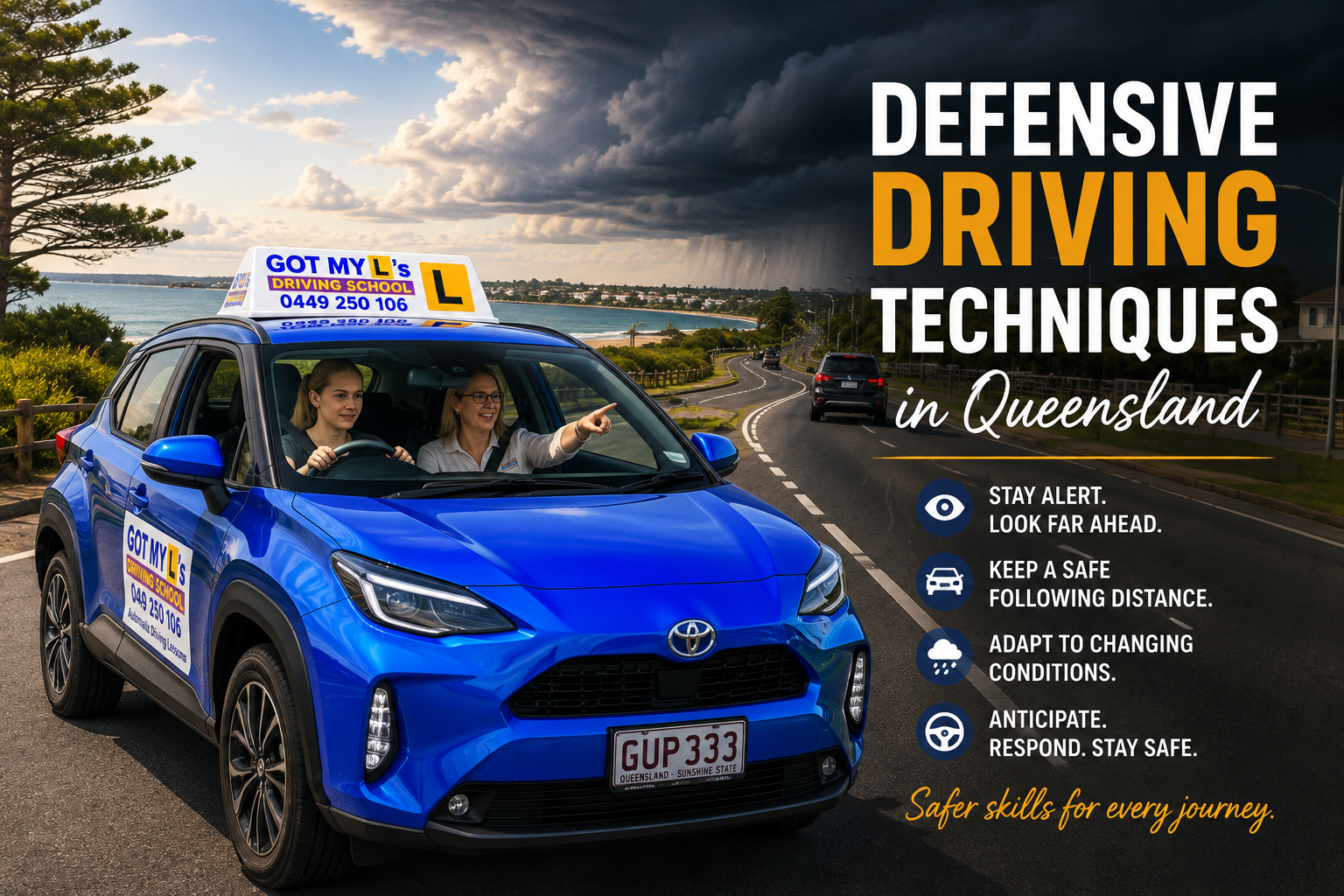
Defensive Driving Techniques in Queensland: Drive Safer and Smarter
Introduction
Defensive driving isn't about driving slowly or being afraid of the road. It's about staying aware, anticipating potential hazards and giving yourself enough time and space to react safely.
Queensland drivers face a wide range of conditions—from busy suburban roads and motorways to wet weather, country roads, roadworks and unsealed surfaces. Learning defensive driving techniques can help you make safer decisions and become a more confident driver.
What Is Defensive Driving?
Defensive driving means actively looking ahead, recognising potential hazards and adjusting your driving before a dangerous situation develops.
Rather than simply reacting when something goes wrong, a defensive driver is constantly asking:
- What could happen next?
- Where are the potential hazards?
- Do I have enough space to react?
- Am I travelling at a safe speed for the conditions?
Queensland's professional driver training guidance places a strong focus on helping learners identify hazards, understand their own limitations and safely respond to changing road and weather conditions.
Good defensive driving is about expecting the unexpected and giving yourself the best possible chance to respond safely.
1. Keep a Safe Following Distance
One of the simplest defensive driving techniques is leaving enough space between your vehicle and the one in front.
In good conditions, Queensland guidance recommends maintaining at least a 2-second gap. In poor conditions, such as rain or reduced visibility, you should increase that distance.
How to use the 2-second rule
Pick a fixed object such as a power pole or road sign.
When the vehicle in front passes it, count:
"One thousand and one, one thousand and two."
If you reach the same point before finishing the count, you're following too closely.
Extra space gives you more time to:
- Brake safely
- React to sudden stops
- See further ahead
- Avoid rear-end collisions
- Adjust to changing traffic conditions
2. Look Further Ahead
Many inexperienced drivers focus only on the vehicle directly in front of them.
Defensive drivers look much further down the road.
This helps you identify hazards earlier, including:
- Brake lights ahead
- Pedestrians approaching crossings
- Vehicles preparing to turn
- Traffic congestion
- Roadworks
- Cyclists
- Changes to speed limits
- Vehicles entering from side streets
The earlier you recognise a developing situation, the more time you have to respond calmly.
3. Scan Constantly for Hazards
Defensive driving means constantly checking your environment.
A good driver doesn't stare straight ahead. You should regularly scan:
- Well ahead of your vehicle
- Your mirrors
- Side streets and driveways
- Pedestrian crossings
- Parked vehicles
- Intersections
- Areas where cyclists or pedestrians may appear
This doesn't mean constantly moving your head around randomly. It means developing a habit of actively observing the entire driving environment.
4. Adjust Your Driving to Queensland's Changing Conditions
Queensland roads can change quickly.
You might begin a journey on dry suburban roads and encounter heavy rain, roadworks, dust or reduced visibility later in the trip.
Queensland Government guidance specifically highlights conditions including unsealed roads, dusty conditions, sand tracks, remote roads and areas used by heavy vehicles.
A defensive driver adjusts their:
- Speed
- Following distance
- Visibility
- Braking
- Steering
- Awareness
to suit the conditions.
Remember: the speed limit is not always the safest speed
The posted speed limit is the maximum permitted speed under ideal conditions. In rain, poor visibility or on loose surfaces, a lower speed may be safer.
5. Driving Safely in Wet Weather
Wet roads can significantly reduce tyre grip and increase stopping distances.
When driving in rain:
- Slow down
- Increase your following distance
- Turn your lights on
- Avoid sudden braking or sharp steering
- Use your demister or air conditioning to maintain clear visibility
- Watch for standing water and flooded roads
Queensland guidance recommends doubling your following distance in wet conditions.
Wet weather is particularly challenging for new drivers because the road may look safe while providing significantly less grip.
Smooth, controlled inputs are important.
6. Managing Distractions
A defensive driver needs their full attention on the driving environment.
Before you start driving:
- Set your navigation
- Adjust your mirrors and seat
- Choose your music
- Secure loose items
- Put your phone away
Once you're moving, your primary responsibility is driving.
Distractions can prevent you from recognising hazards early enough to respond safely.
7. Learn to Anticipate Other Drivers
One of the most important defensive driving skills is recognising that other road users may make mistakes.
For example:
- A vehicle may change lanes without indicating.
- A driver may brake suddenly.
- Someone may pull out from a side street.
- A pedestrian may step onto the road.
- A cyclist may need to move around an obstacle.
Defensive driving doesn't mean assuming everyone will make a mistake.
It means leaving yourself enough space, time and attention to deal with a mistake if one occurs.
8. Stay Calm in Heavy Traffic
Heavy traffic can be frustrating, particularly for new drivers.
Defensive driving means resisting the temptation to:
- Follow too closely
- Rush through gaps
- Change lanes unnecessarily
- Compete with other drivers
- React aggressively
Instead:
- Keep a safe gap
- Plan ahead
- Be patient
- Use your indicators early
- Expect traffic to stop and start
Smooth, predictable driving makes the road safer for you and everyone around you.
9. Defensive Driving on Rural and Unsealed Roads
Queensland has a huge variety of rural and regional roads.
Unsealed surfaces such as gravel, dirt and sand can reduce tyre traction, while dry conditions can create dust and reduce visibility. Wet weather can make some unsealed roads slippery, muddy or boggy.
When driving on these roads:
- Reduce your speed
- Increase the gap to the vehicle ahead
- Avoid sudden steering movements
- Be prepared for changing surfaces
- Watch for wildlife
- Take extra care around crests and corners
If visibility is seriously reduced by dust, Queensland guidance advises pulling over safely and waiting for conditions to improve.
Defensive Driving Skills for Learner Drivers
Learning to drive isn't just about passing your test.
A good driving instructor should help you develop the ability to:
- Recognise hazards
- Maintain safe space around your vehicle
- Make safe decisions
- Adapt to changing conditions
- Understand your limitations
- Build confidence without becoming overconfident
Queensland's accredited driver trainer framework specifically focuses on developing the knowledge, attitudes and skills needed for safe driving, including hazard awareness and responding to changing environments.
How Got My L's Driving School Can Help
At Got My L's Driving School, our goal isn't simply to get learners through their driving test.
We want to help learners build the skills and confidence needed for everyday driving.
During our automatic driving lessons, we can help you develop skills including:
- Hazard awareness
- Safe following distances
- Intersection awareness
- Lane positioning
- Managing busy traffic
- Driving in different road conditions
- Building confidence behind the wheel
- Preparing for the Queensland practical driving test
Whether you're a complete beginner or preparing for your test, lessons can be tailored to the areas where you need the most support.
FAQ
What is defensive driving?
Defensive driving is a proactive approach to driving that focuses on recognising hazards early, anticipating potential problems and maintaining enough time and space to react safely.
What is a safe following distance in Queensland?
Queensland guidance recommends at least a 2-second gap in good conditions. In poor weather or reduced visibility, you should increase that distance.
Is defensive driving useful for learner drivers?
Yes. Defensive driving skills can help learner drivers develop hazard awareness, safer decision-making and greater confidence in different driving conditions.
How do I improve my hazard awareness?
Look well ahead, regularly check your mirrors, scan intersections and side streets, and avoid distractions. The earlier you recognise a potential hazard, the more time you have to respond safely.
How should I drive in wet weather?
Slow down, increase your following distance, use your lights, maintain good visibility and avoid sudden braking, acceleration or steering movements.
Is defensive driving only for inexperienced drivers?
No. Defensive driving is a skill that benefits every driver. Experience helps, but maintaining good habits and staying aware of changing conditions is important throughout your driving life.