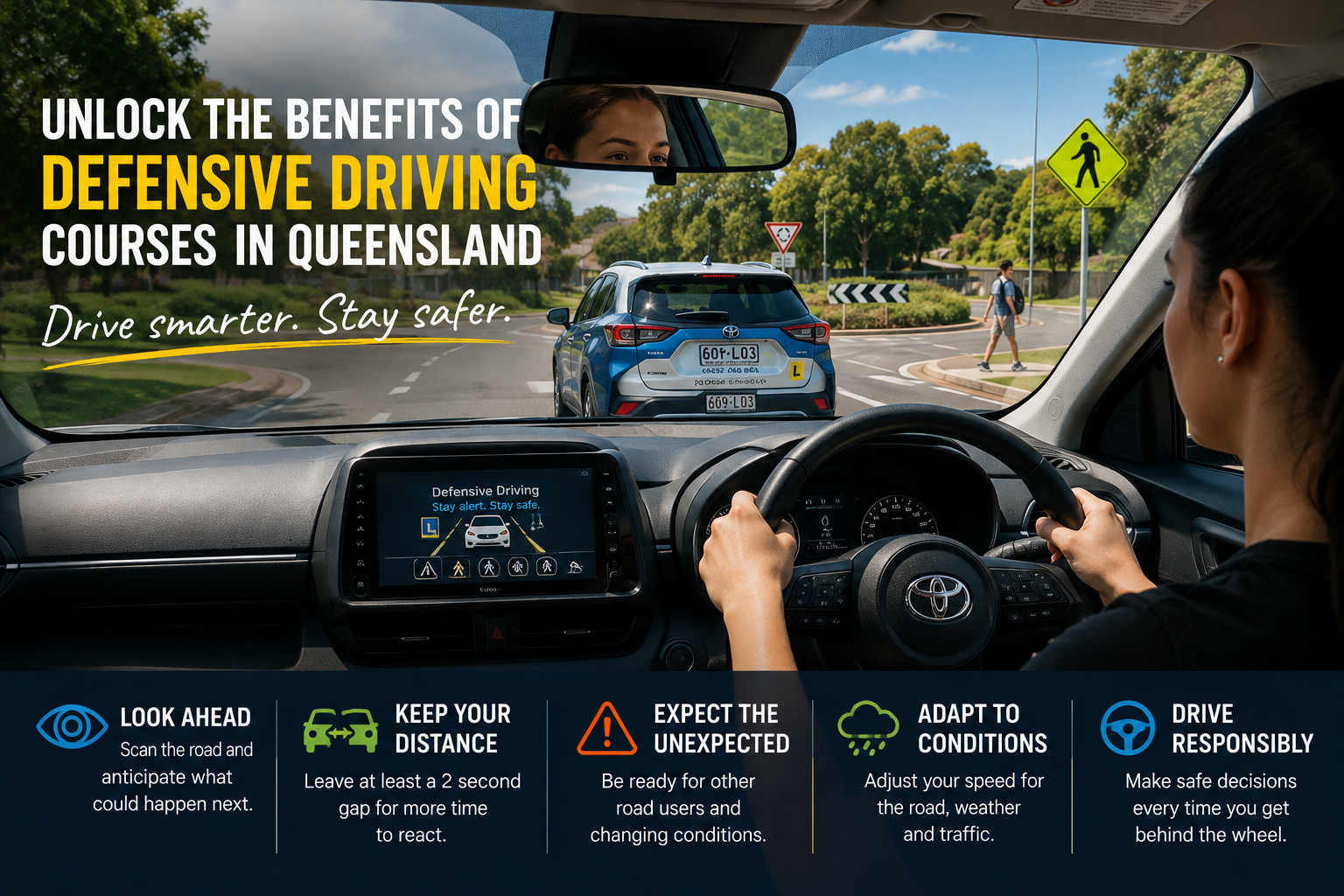
Unlock the Benefits of Defensive Driving Courses in Queensland
Learning to drive is about much more than passing your test.
Getting your licence is an exciting milestone, but the real learning continues long after the L plates come off. Queensland roads can present constantly changing situations—from busy roundabouts and school zones to wet weather, heavy traffic and unpredictable behaviour from other road users.
That is where defensive driving skills can make a real difference.
A good defensive driving course is not simply about learning how to brake harder, steer faster or handle a car at high speed. The Queensland Government advises that the most useful driver training focuses on recognising hazards early, understanding how to respond safely, managing driving pressures and developing safe attitudes behind the wheel.
Whether you are a learner driver, a new P-plater or someone who wants to become a more confident driver, improving your defensive driving skills can provide benefits that last well beyond your driving test.
Key Takeaways
- Defensive driving is about anticipating problems before they become emergencies.
- Hazard perception helps drivers scan, recognise and respond to risks earlier.
- Good driver training should focus on safe decision-making, not just vehicle handling.
- Defensive driving skills can help learners build confidence through experience.
- Accredited driving lessons can also contribute to a Queensland learner's logbook requirements.
- The goal is not simply to pass the driving test—it is to develop safer habits for everyday driving.
Defensive Driving Is About Thinking Ahead
One of the biggest benefits of defensive driving is learning to think beyond what is happening directly in front of your car.
Many inexperienced drivers naturally focus on the vehicle immediately ahead. As experience grows, however, drivers learn to look further ahead and scan the entire road environment.
Queensland's hazard perception guidance uses a simple three-step approach:
- Scan the road environment for potential risks.
- Recognise which situations could become dangerous.
- Respond early and safely.
The earlier you identify a developing hazard, the more time you have to make a decision.
For example, instead of waiting until the car directly in front suddenly brakes, an alert driver may notice traffic slowing several vehicles ahead and begin reducing speed earlier.
That extra time can make driving smoother, calmer and safer.
Building Better Hazard Perception Skills
Hazard perception is one of the most valuable skills a new driver can develop.
A hazard does not have to be an emergency. It could be:
- A child playing near the road
- A vehicle waiting to turn
- A pedestrian approaching a crossing
- A car indicating several vehicles ahead
- A cyclist or e-bike rider
- A vehicle entering from a side street
- Changing weather conditions
- Heavy traffic or congestion
The key is learning to recognise what might happen before it actually does.
Queensland learner drivers are required to pass the hazard perception test before booking their practical driving test. The test is designed to assess a driver's ability to recognise potentially dangerous situations and respond safely.
But hazard perception should not just be something you learn for a test.
It is a skill that develops through experience and should become part of the way you drive every day.
Greater Confidence Behind the Wheel
Confidence is important—but there is a difference between being confident and becoming overconfident.
A good driver training program should help drivers understand their abilities while also recognising their limitations.
The Queensland Government specifically recommends looking for driver training that addresses hazard recognition, safe responses and the management of driving pressures. It warns that courses focused mainly on advanced vehicle handling and emergency manoeuvres can sometimes create a false sense of ability, particularly for inexperienced drivers.
Real confidence comes from knowing how to deal with everyday situations such as:
- Entering busy roundabouts
- Changing lanes safely
- Driving in heavy traffic
- Managing safe following distances
- Approaching complex intersections
- Driving in wet weather
- Sharing the road with cyclists and pedestrians
- Responding calmly when something unexpected happens
The more experience a driver gains in different situations, the more prepared they can become.
Learning to Manage Driving Pressure
Driving can sometimes involve pressure.
A driver may feel pressured by traffic behind them, friends in the car, impatient drivers or simply the fear of making a mistake.
Defensive driving encourages drivers to make safe decisions rather than reacting emotionally or feeling pushed into doing something they are uncomfortable with.
For a learner or new P-plater, this can mean understanding that it is okay to:
- Wait for a safe gap
- Take extra time at an unfamiliar intersection
- Slow down when conditions change
- Avoid following another driver's risky behaviour
- Pull over safely if they are feeling overwhelmed
A safe driver does not need to prove anything to anyone else on the road.
Experience in a Range of Driving Conditions
No two driving lessons are exactly the same.
A learner might feel comfortable driving around quiet suburban streets but find busy traffic, complex intersections or unfamiliar roads much more challenging.
Queensland's learner driver guidance encourages gaining experience in a variety of traffic and road conditions after basic vehicle control skills have been developed. This helps learners build the broader skills needed to become safer drivers.
Professional driving lessons can help introduce new situations progressively, including:
- Quiet suburban streets
- Busy shopping areas
- Multi-lane roads
- Roundabouts
- Highway driving
- School zones
- Wet-weather conditions when appropriate
- Day and night driving
The aim is not to rush a learner into difficult situations. It is to gradually build experience and confidence.
Better Decision-Making, Not Just Better Car Control
Being able to steer, brake and park is important—but those skills alone do not make someone a safe driver.
Good driving also requires decision-making.
Every time you drive, you are constantly making decisions about:
- Your speed
- Your following distance
- Your road position
- When to slow down
- Whether it is safe to proceed
- How to respond to other road users
Queensland's guidance for driving schools states that quality driver training should go beyond the technical skills required to pass the practical driving test. It should encourage safe driving attitudes and teach the importance of avoiding and managing risk.
That is one of the biggest benefits of developing defensive driving skills.
You are learning not just how to operate the vehicle, but how to think about what is happening around you.
Defensive Driving Skills Can Benefit Learners and Experienced Drivers
Defensive driving is not just for people who are learning to drive.
Learner Drivers
Learners can benefit by developing good habits from the beginning. This includes scanning effectively, maintaining safe distances and learning to anticipate hazards.
New P-Platers
Getting your licence brings greater independence—and greater responsibility. Continuing to develop safe driving habits can help new drivers adjust to making decisions without a supervisor sitting beside them.
Returning Drivers
Someone who has not driven for a long time may benefit from refreshing their skills and rebuilding confidence.
Experienced Drivers
Even experienced drivers can develop habits over time. A refresher can be an opportunity to review road awareness, safe following distances and modern driving conditions.
A Driving Lesson Can Offer More Than Just Test Preparation
For learner drivers, professional lessons can provide practical benefits while also helping them work towards their Queensland logbook requirements.
Every hour of daytime driving with an accredited driver trainer can count as three hours in a learner's logbook, up to a maximum of 10 actual hours or 30 logbook hours.
Of course, the real value of a lesson should not simply be the additional logbook hours.
The focus should be on what the learner gains from the experience.
A good lesson should help a learner understand:
- What they are doing
- Why they are doing it
- What potential hazards they should be looking for
- How they can make safer decisions next time
Choosing the Right Defensive Driving Training
If you are considering additional driver training, it is worth looking beyond flashy promises or courses that focus mainly on high-speed manoeuvres.
Queensland's StreetSmarts guidance recommends looking for training that covers areas such as hazard perception, recognising risks before they develop, safe responses and managing driving pressures.
Questions worth asking include:
- Does the training focus on real-world driving?
- Does it teach hazard recognition?
- Does it help develop safe decision-making?
- Is the training appropriate for the driver's current experience level?
- Does the instructor focus on building confidence without encouraging overconfidence?
The best driver training should leave someone feeling more prepared—not believing they are invincible.
The Biggest Benefit: Becoming a Safer, More Aware Driver
At the end of the day, the biggest benefit of defensive driving is not simply becoming better at passing a test.
It is becoming more aware of what is happening around you.
Good drivers are constantly observing, anticipating and adjusting. They understand that other road users can make mistakes and that road conditions can change quickly.
Defensive driving is about giving yourself more time, more space and more options.
The earlier you see a potential problem, the easier it is to respond calmly and safely.
Learn More With Got My L's Driving School
At Got My L's Driving School, our focus is not just on getting learners through their driving test.
We want our students to develop the skills, awareness and confidence they can take with them long after they receive their licence.
From hazard perception and safe following distances to roundabouts, busy intersections and everyday decision-making, our lessons are designed to help learners gain practical experience on Queensland roads.
Passing your test is the goal for the day. Becoming a safer driver is the goal for life.
FAQ
What is defensive driving?
Defensive driving is a way of driving that focuses on anticipating potential hazards, maintaining awareness and making safe decisions before a situation becomes dangerous.
Can defensive driving help learner drivers?
Yes. Learner drivers can benefit from developing hazard perception, safe decision-making and experience across different traffic and road conditions. Queensland guidance encourages learners to gain experience in a variety of conditions as they develop their skills.
Is hazard perception important in Queensland?
Yes. All learner drivers must pass the hazard perception test before booking their practical driving test. The test assesses the ability to recognise potentially dangerous situations and respond safely.
What should a good defensive driving course focus on?
According to Queensland's StreetSmarts guidance, useful driver training should focus on recognising hazards, responding safely, managing driving pressures and developing safe attitudes and behaviours—not simply advanced vehicle handling.
Do professional driving lessons count towards my Queensland logbook?
Yes. Every hour of eligible daytime driving with an accredited driver trainer counts as three hours in the learner logbook, up to a maximum of 10 actual hours or 30 logbook hours.
Is defensive driving only for young drivers?
No. While it can be particularly valuable for learners and new drivers, defensive driving skills can also benefit returning or experienced drivers who want to refresh their awareness and confidence.